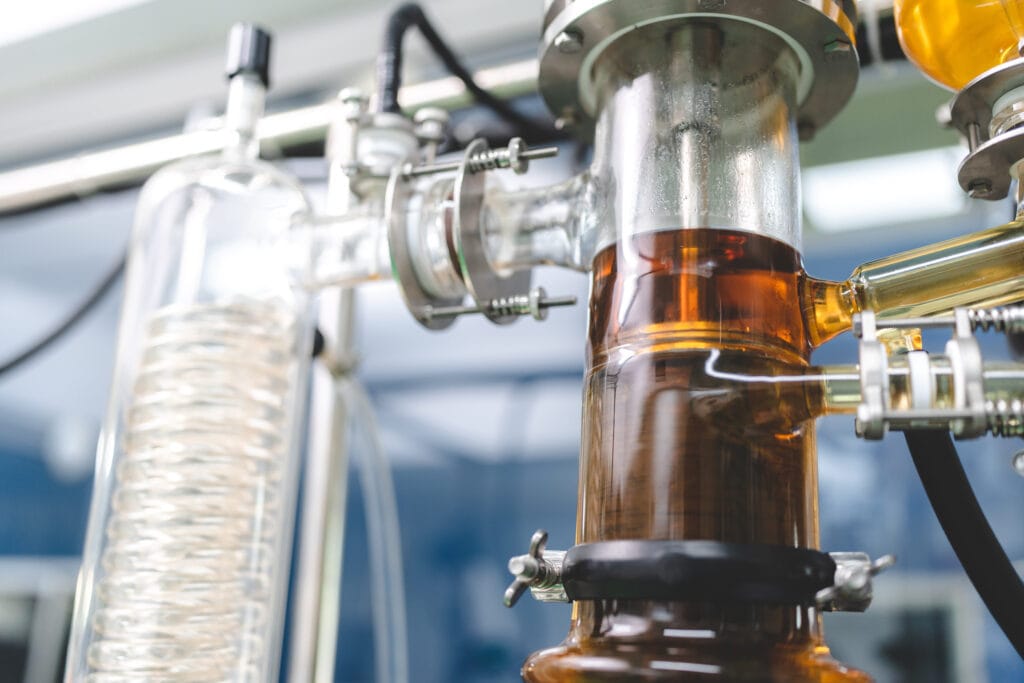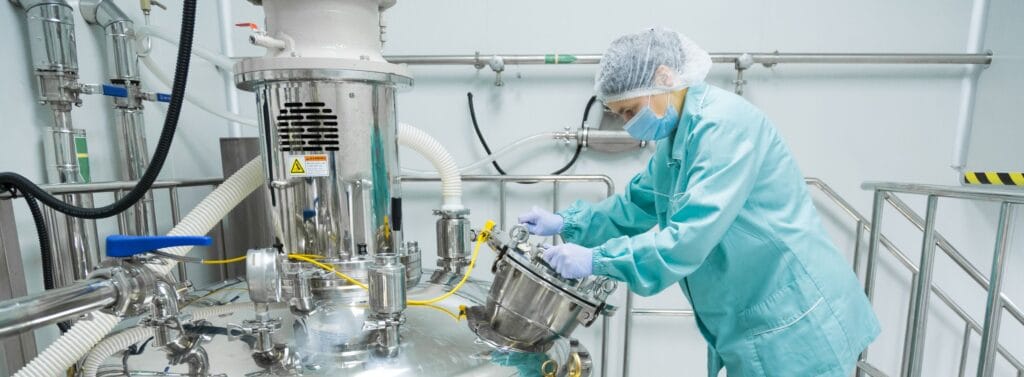

Afriplex has commercialised Lipozome®, our lipid-based delivery technology for botanical and other lipophilic actives. The launch formalises a capability our development group has been building for several years.
The absorption problem
Many of the most interesting botanical actives share an inconvenient property. They dissolve readily in oils and barely at all in water.
The digestive tract is an aqueous environment, so a compound that will not dissolve there cannot present itself for absorption, and a large part of an ingested dose can pass through without entering circulation at all. What is absorbed then travels to the liver, where first-pass metabolism can remove much of the remainder before the active reaches the general circulation.
Cannabidiol illustrates the pattern. Oral bioavailability in the fasted state has been reported in the single digits to the high teens, and it varies substantially with the fat content of whatever it is taken with. Curcuminoids are worse. The practical consequence for a formulator goes beyond low absorption: the proportion absorbed varies between individuals and between occasions, and variability on that scale makes consistent dosing very difficult to design around.
What lipid-based systems do
Liposomes enclose the active within phospholipid vesicles, built from the same class of molecules that form cell membranes, keeping it dispersed and protected within an aqueous format. Self-emulsifying systems present the active dissolved in an isotropic mixture of oil, surfactant and co-surfactant that forms a fine emulsion spontaneously on contact with gastrointestinal fluid. Nanoemulsions achieve a similar dispersion through engineered droplet size.
The mechanisms these systems exploit are reasonably well characterised. They hold the active in a solubilised state through the gut instead of allowing it to precipitate, they increase the effective surface area available for absorption, and for strongly lipophilic molecules they can promote uptake through the intestinal lymphatic route, which enters the circulation without first passing through the liver.
The same physical enclosure does secondary work a formulator values: protection of sensitive actives against oxidative and hydrolytic degradation, masking of unpleasant flavours, and more predictable release behaviour. Alongside Lipozome®, our development group applies related nanotechnologies for controlled release where a product concept calls for it.
What improvement means, and what it does not
Delivery science improves pharmacokinetics. Published comparative studies of lipid-based cannabinoid and curcuminoid formulations report measurably higher and earlier plasma exposure than unformulated or simple oil comparators. That is a testable engineering result with quantified plasma concentrations behind it, and it is the full extent of what such a study shows.
Improved absorption is not evidence of clinical benefit. A delivery system confers no therapeutic properties on the active it carries, and no formulation can be assumed to inherit the evidence base of a different formulation of the same molecule. Each product earns its own data: its own pharmacokinetic characterisation, its own stability programme and, where claims are intended, its own regulatory pathway in each market.
The development work behind a format
Analytical methods have to be developed and validated to quantify the active in its new matrix, and this is rarely a straightforward transfer from the method used for the raw ingredient, because the encapsulating system frequently interferes. Physical stability has to be demonstrated over shelf life, since particle size distribution and encapsulation efficiency can drift long before any chemical degradation becomes measurable. Compatibility with the finished dosage form has to be established. And the whole package has to be documented well enough that the customer can defend the product built on it.
Delivery development at Afriplex therefore sits inside the same quality system as everything else we manufacture.
Where this fits
Lipozome® and the surrounding delivery portfolio serve the categories where lipophilic actives concentrate: complementary medicines, botanical formulations, and food and beverage applications. Product developers with an active that will not absorb reliably can bring it to us for formulation, measurement and documentation.
This article describes formulation technology offered to businesses. It is not directed at consumers, nothing in it is a therapeutic claim or medical advice, and improved absorption characteristics do not imply clinical benefit for any product. Cannabinoid-containing materials are regulated substances in South Africa; nothing here offers such products to the public. Regulatory classification varies by country.