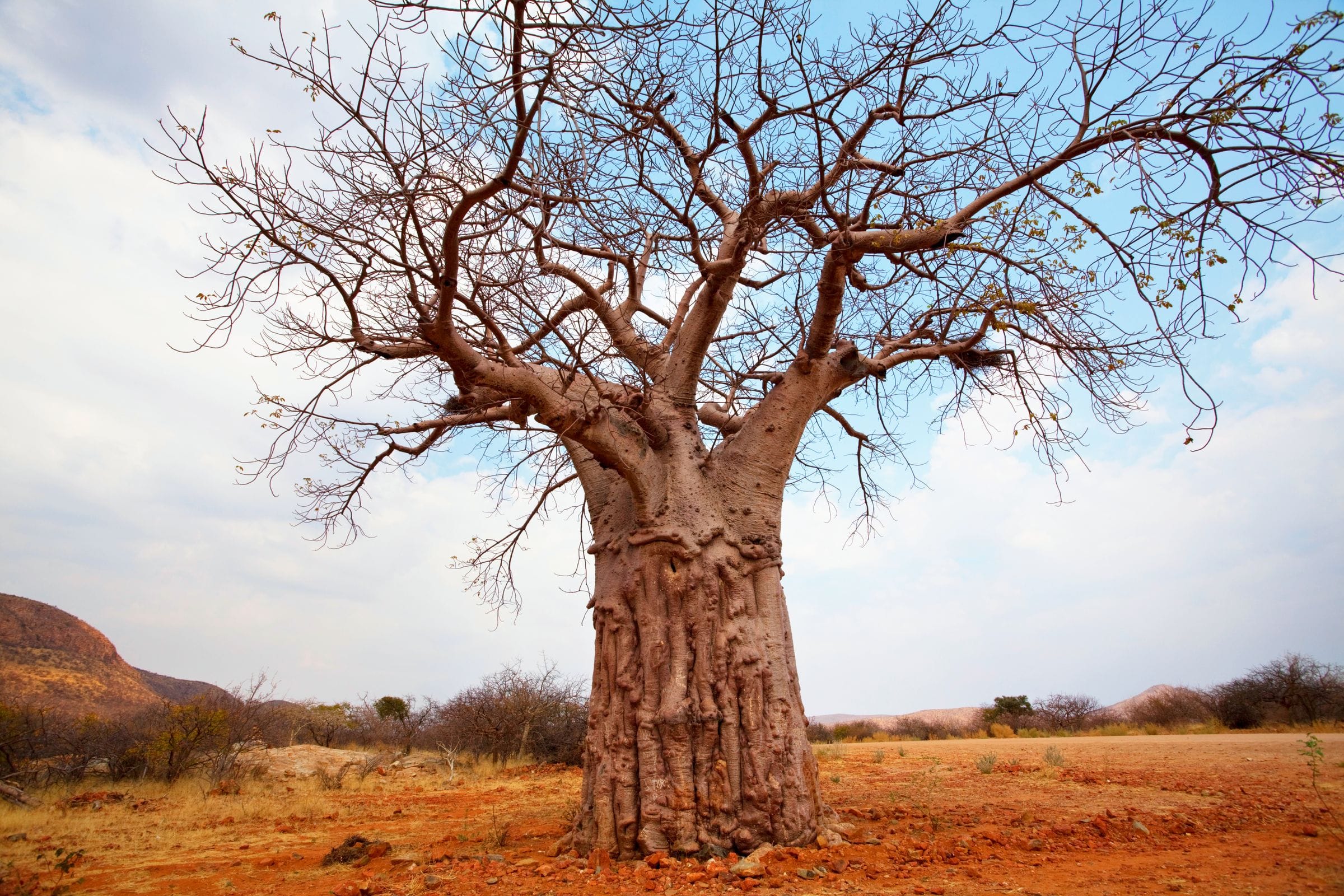
The baobab, Adansonia digitata, is Africa’s most recognisable tree, known across the savanna by names ranging from the upside-down tree to the monkey-bread tree. For food and nutraceutical formulators it is the source of an unusual fruit ingredient with a well-defined composition and, rarely for an African botanical, a documented regulatory history in both the European Union and the United States.
A fruit that dries itself
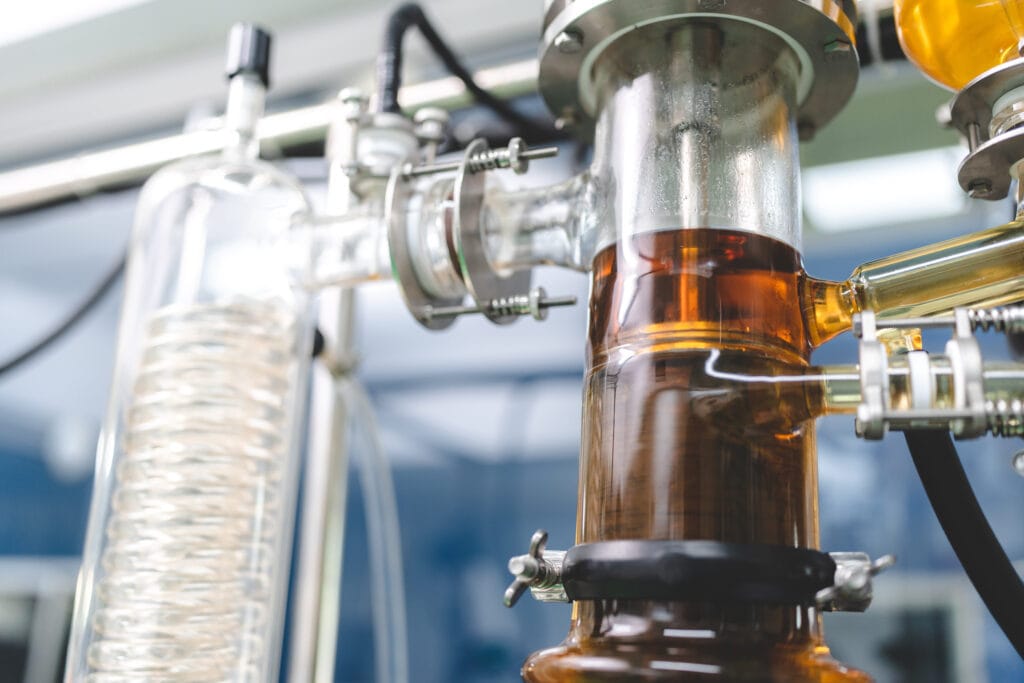
Baobab is one of very few commercial fruits that dehydrates on the tree. Inside the hard, woody pod the pulp dries to a pale, friable solid at low moisture and low water activity, with no artificial drying step required. Processing is separation more than transformation: the pod is cracked, the dry pulp is separated from the seeds and fibre, and the material is milled to a powder.
The ingredient is therefore shelf-stable by nature, a property most fruit ingredients have to be engineered into at some cost to their composition. Heat-sensitive constituents that a drying step would degrade are never exposed to one.
What the pulp contains
Published analyses describe a distinctive profile. Vitamin C is commonly reported in the range of roughly 150 to 300 mg per 100 g of the dried pulp. Dietary fibre accounts for a substantial proportion of the pulp mass, with a large soluble fraction dominated by pectins. Potassium, calcium and magnesium are present and quantifiable, with ranges available on the specification, alongside B-group vitamins and a polyphenol fraction that has attracted its own research literature.
The pulp’s natural acidity gives it a clean, tart sensory profile that works with fruit systems rather than against them. Its traditional use as a substitute for cream of tartar follows directly from that acidity.
One caveat belongs in the same section. Published values vary widely with origin, season, soil and analytical method, so a figure drawn from one paper may not describe the material in front of you. Variability of this kind is the standing argument for buying botanical ingredients against a specification instead of a species name, which is the principle on which all Afriplex material is supplied.
A regulatory record few African botanicals have
In 2008 baobab dried fruit pulp was authorised as a novel food ingredient in the European Union, on an application driven by the African natural products trade. The authorisation carries a compositional specification for the approved material covering moisture, ash, protein, fat and total carbohydrate, together with a particle size range and a limit on foreign matter.
In 2009 the United States Food and Drug Administration responded with no questions to a GRAS notification covering baobab dried fruit pulp, for use in categories including blended fruit drinks and fruit and cereal bars, with use levels stated for each.
For a formulator that combination is what market access looks like in practice: a defined ingredient, a defined specification and an established lawful route into two major regulatory systems. It also made baobab a template for what southern Africa’s botanical trade can achieve when the quality documentation leads.
Formats and applications
Afriplex supplies baobab in formats matched to the application. Depectinised extract suits clear beverages, iced teas and carbonated drinks, where the native pectin would otherwise cloud or thicken the product. Full fruit pulp powder serves dairy applications, smoothies, jams and bakery. Pectin-rich fractions bring fibre and binding functionality to fruit bars, cereals and snacks. Baobab seed oil, pressed from the seeds the pulp process liberates, serves the cosmetic industry as a carrier oil.
Four ingredient streams from one fruit is a useful demonstration of how a botanical raw material becomes a portfolio instead of a single line item.
Sourced from working landscapes
Baobab is wild-harvested across the African savanna from trees that are frequently centuries old, by rural communities for whom the annual fruit fall represents meaningful income. A responsible baobab supply chain rests on sustainable wild-harvest practice and on compliance with South Africa’s access and benefit-sharing framework for indigenous biological resources.
The commercial and the ethical arguments point the same way here. Trees worth more standing than felled tend to remain standing, and buyers in regulated markets increasingly ask for the documentation that proves the chain behind the powder.
This article describes a food and nutraceutical ingredient supplied to businesses for formulation. It is not directed at consumers, compositional information is not a nutrition or health claim for any finished product, and nothing in it is medical advice. Regulatory classification and permitted claims vary by country.