Afriplex, together with a leading international research group and the Cannabis Research Institute (CRI), is producing cannabinoids by biological synthesis, building the molecules in micro-organisms instead of harvesting them from the cannabis plant. The first target is cannabigerol, CBG.
Why CBG is scarce
Cannabigerolic acid, CBGA, sits at the branch point of the cannabinoid pathway. Dedicated enzymes convert it into the acidic precursors of THC, CBD and CBC, so almost everything the plant makes passes through CBGA first, which is why CBG is often called the mother cannabinoid.
It is also why so little of it survives to harvest. A mature plant has spent most of its CBGA making other cannabinoids, and CBG typically remains at a fraction of a percent of dry biomass. Recovering commercial quantities from plant material means processing very large volumes for very small yields, and the economics have kept a scientifically interesting molecule commercially scarce.
Building the pathway in yeast
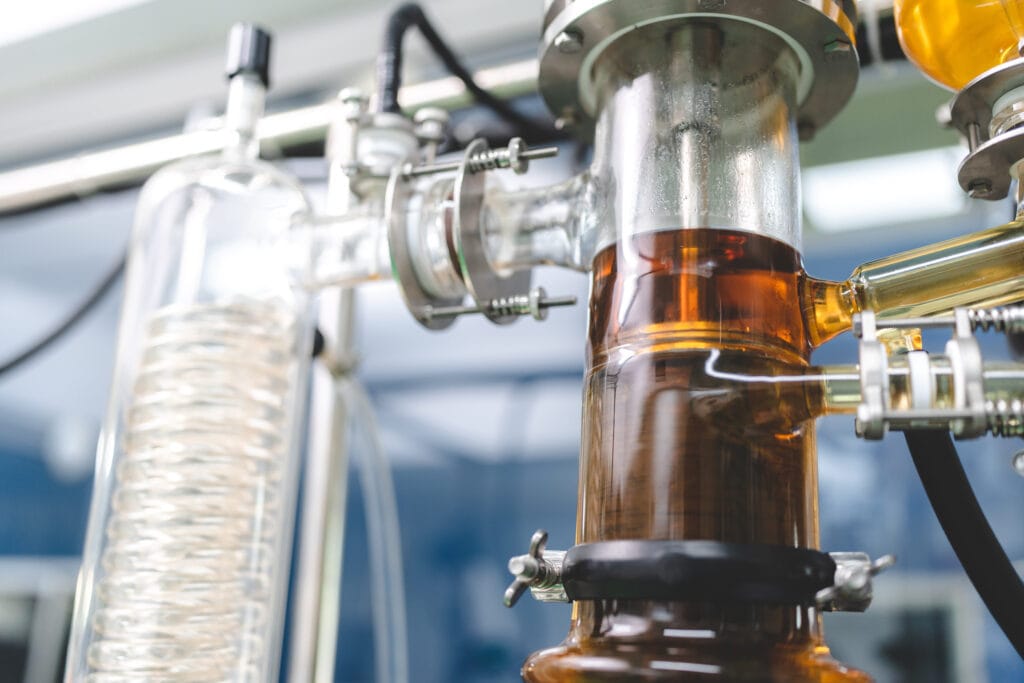
Heterologous biosynthesis expresses the genes encoding the plant’s biosynthetic enzymes in a host organism such as yeast, which then carries out the same enzyme-catalysed cascade, assembling simple feedstock molecules step by step into the finished cannabinoid.
The reference demonstration was published in Nature in 2019, when a Berkeley group reported complete biosynthesis of cannabinoids in engineered Saccharomyces cerevisiae starting from galactose. Their construct had to solve three problems at once. The yeast’s own mevalonate pathway was amplified to supply geranyl pyrophosphate. A hexanoyl-CoA pathway was introduced so the cell could make a fatty acid precursor it does not naturally produce. The cannabis olivetolic acid pathway was then expressed, and a prenyltransferase joined the two halves to give CBGA. Feeding the culture different fatty acids produced cannabinoid analogues that do not occur in the plant at all.
What changes in a fermenter
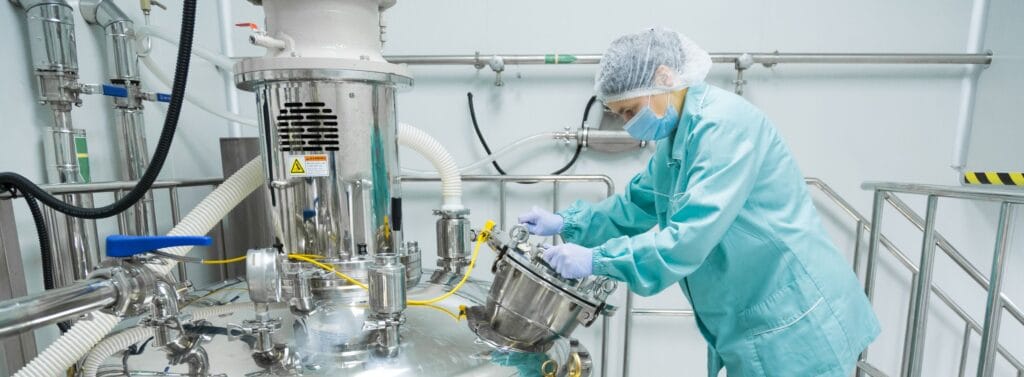
Fermentation runs in closed vessels under defined conditions all year round, independent of climate, season and soil. The organism is engineered to make one target molecule instead of the plant’s variable mixture, so downstream purification starts from a cleaner position.
The quality-control burden does not disappear, though. It changes shape. Pesticide residues, heavy metals taken up from soil, mycotoxins and seasonal variation in cannabinoid ratio do not arise in a fermenter, and in their place come strain stability across generations, sterility, media composition, and the removal of host cell proteins and residual media components during purification. Neither set of controls is harder than the other, and a manufacturer moving between them needs analytical methods to match. For minor cannabinoids in particular, fermentation may be the only route to material at a price the market will pay.
“Technological advances will open up opportunities to manufacture actives currently only produced in plant systems,” says Danie Nel, director at Afriplex. “The biosynthesis of cannabinoids in organisms other than the cannabis plant is a first for South Africa.”
Two qualifications
The first is economic. Fermentation titres and downstream purification costs are still maturing. Production in a fermenter is not automatically cheaper than production in a field for every molecule at every scale, and the crossover point differs by cannabinoid.
The second is regulatory, and product developers miss it more often. A cannabinoid’s legal status does not necessarily improve because it was made without a plant. South Africa’s scheduling exclusions for low-concentration cannabinoid material are worded around the naturally occurring cannabinoid content of source material, so cannabinoids produced by other routes have to be assessed on their own footing. In the European Union, isolated CBD is treated as a novel food whether it was extracted or synthesised. Classification follows the molecule and its route of manufacture, jurisdiction by jurisdiction, and that analysis belongs at the start of a development programme. Our regulatory affairs team works alongside the science for exactly this reason.
the regulatory distinction between plant-derived and non-plant-derived cannabinoids has sharpened in several markets since publication, notably in United States federal hemp law, which from late 2026 excludes cannabinoids synthesised outside the plant from the hemp definition. Route of manufacture remains a regulatory variable and is not a way around one.
This article describes ingredient research and manufacturing technology for licensed business partners. It is not directed at consumers, nothing in it is a therapeutic claim or medical advice, and no statement should be read as attributing health effects to any cannabinoid. Cannabinoid materials are regulated substances; nothing here is an offer of such products to the public. Regulatory classification varies by country.