This article tells you where a kanna product can lawfully be sold, what each market asks for first, and which documents to put in front of a supplier before you commit a budget.
Kanna is a small succulent from the dry interior of South Africa
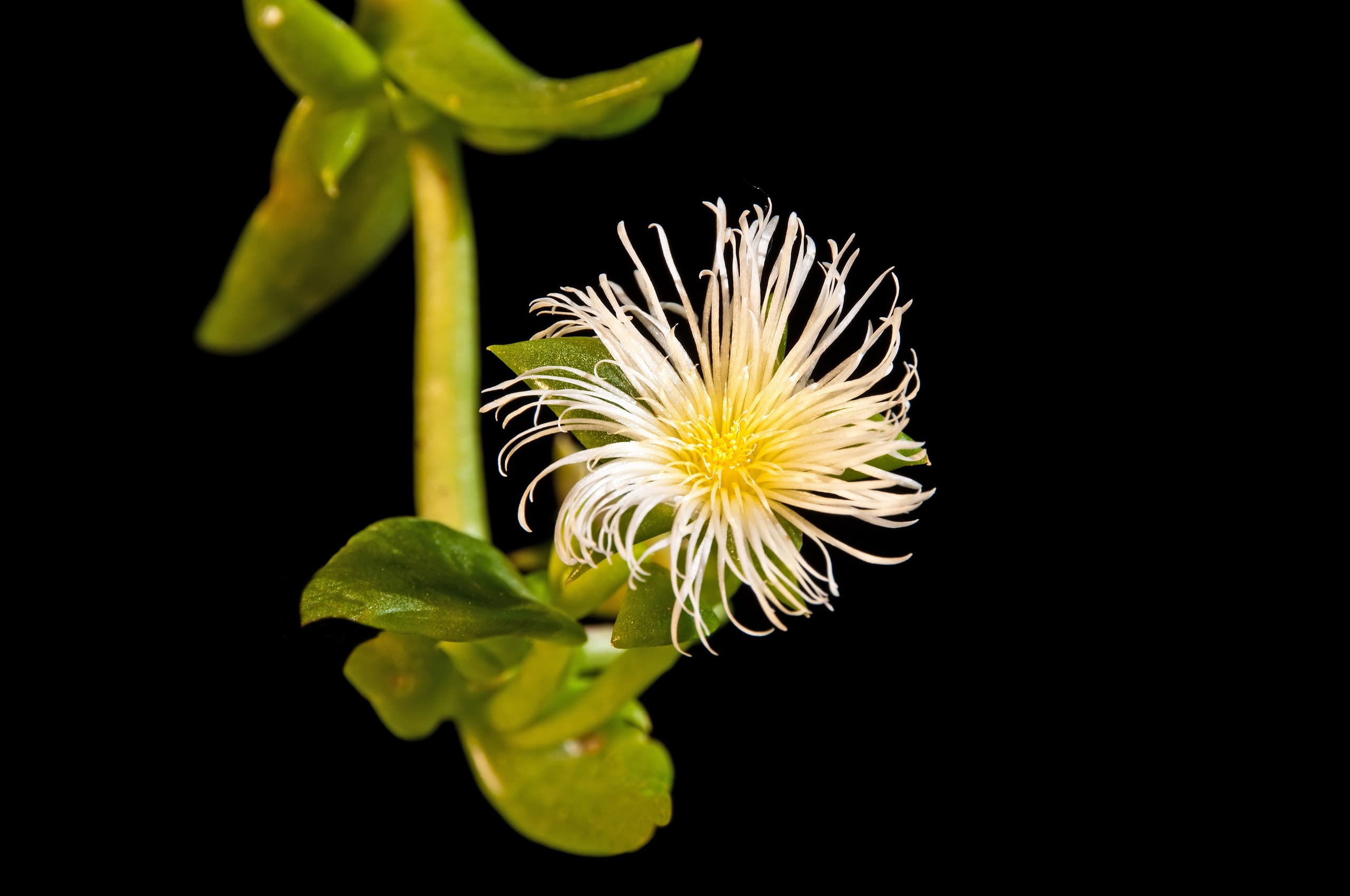
Sceletium tortuosum is a low, sprawling succulent from the Karoo and Namaqualand, in the arid Northern and Western Cape. In the trade and in Afrikaans it is called kanna, and the fermented traditional preparation is called kougoed. The plant is endemic to South Africa and grows nowhere else.
The trade characterises it on a group of mesembrine-type alkaloids. Commercial material reaches a brand owner as a dried powder extract, usually on a carrier. There is a long documented history of traditional use in the region, which is a fact about history and not an argument for a product.
Calm is a crowded shelf and kanna is the name pulling the search traffic
Calm and mental wellbeing is one of the fastest-moving shelves in global wellness and one of the hardest to build on credibly. Kanna carries more consumer search demand than almost any other plant in the African botanical trade, which is why brand owners keep arriving with a gummy or a canned drink already sketched out.
The demand is real. The route to market is the part that is usually missing. This shelf is also difficult for a reason unconnected to the plant: in most markets nothing may be said about what the ingredient does, so a product competes on format, flavour, brand and price alone.
Gummies, drinks and shots each ask something different of the extract
A gummy needs a low inclusion weight, a stable colour and a flavour that survives masking. A beverage needs solubility in a cold aqueous base, no haze and no drift over shelf life. A shot tolerates more, because the serve is small, dark and already strongly flavoured.
Capsules are the easiest format and the least interesting commercially. Whatever the format, the first question to a supplier is not the alkaloid figure. It is the carrier, the bulk density and the moisture behaviour, because those decide whether the material can be dosed accurately on a line.
Taste, colour and dose volume are the formulation challenges to plan for
Kanna extracts are bitter and vegetal, and they are usually brown. Both properties travel into the finished product at real inclusion rates. A botanical that tastes bitter at a working inclusion rate is a gummy problem before it is a marketing problem, and masking it costs sweetener, flavour and often a darker colour than the brand deck assumed.
Extract powders in this class are frequently hygroscopic. In a gummy that shows up as sticking and surface tack. In a stick pack it shows up as caking. In a drink the questions are haze, sedimentation and whether the flavour holds through pasteurisation or hot fill. Ask for stability data on the format you intend to sell, not on the powder in a drum.
The label rules differ by market and one of the big markets is closed
In the European Union kanna is an unauthorised novel food. There is no established record of significant human consumption in the Union before 15 May 1997, which is the test Regulation (EU) 2015/2283 applies, and no authorisation has been granted. The food supplement route is therefore closed until an authorisation exists. That is not a labelling nuance; it is the whole plan.
In the United States a botanical must either be an old dietary ingredient marketed before 15 October 1994 or carry a New Dietary Ingredient notification the FDA has not objected to. US status is a question you answer for your own material and your own intended use.
Great Britain runs its own novel foods regime inherited from the same rules, with authorisation through the Food Standards Agency, and Northern Ireland follows the EU position. In South Africa products of this type sit under the SAHPRA complementary medicines framework.
Kanna grows nowhere else, and cultivated against wild-collected is the real question
Kanna is endemic to South Africa, so every kilogram in world trade starts in one country. The sourcing question is whether a given lot was cultivated or wild-collected, and whether your supplier can show you which.
Kanna reaches the trade as dried material, usually fermented and then milled, and milling removes the visual cues that would identify the species and the plant part. So ask how identity is confirmed on incoming lots and whether reference material is retained. Ask for traceability to a season and a site rather than an origin story. A supplier that extracts at origin shortens the chain, because material bought through an intermediary tends to arrive with an assay and no field record behind it.
Questions brand owners ask
Can I launch a kanna gummy in Germany or France?
Not as a food supplement. Kanna is an unauthorised novel food across the European Union, so the supplement channel is closed until an authorisation exists. No member state can open it for you individually.
Can I use the published clinical work in my file?
No. The clinical work on Sceletium tortuosum was conducted on a specific branded extract at a defined specification, and it attaches to that material. Reading it across to a different extract made by a different process is not a substantiation strategy.
What actually gets me into the United States?
Old dietary ingredient status for your specific material, or an NDI notification the FDA has not objected to. Both are decided on the composition and intended use you put forward, and both need legal advice specific to your product.
How long should I allow?
Longer for the regulatory work than for the manufacturing. On kanna, the regulatory work should start before the formulation work, because the answer may change which market you launch in.
What does a first order look like?
That depends on format and line. A gummy trial and a tablet trial are not the same commitment, so scope the format before scoping the volume.
How Afriplex supplies kanna
We extract kanna in South Africa, the only country where the plant grows, from cultivated and wild-harvested material. Sceletium Tortuosum PE sits within our NOVEL-T™ range, and KannaSpectrum™ is our separate branded ingredient with a defined specification. Extraction and finished dosage form manufacture sit in one licensed organisation in Paarl, including our pharmaceutical-grade gummy line under a Category A SAHPRA licence. Specifications are available on request.
This article describes a botanical ingredient supplied to businesses for formulation. It is not directed at consumers, it does not describe a finished product, and nothing in it is a therapeutic claim or medical advice. Regulatory classification varies by country.