After reading this you will know whether a pelargonium product belongs in the medicines channel or the supplement channel, and how that single decision fixes the grade, the format and the label.
Pelargonium is a South African geranium, and the root is the part that trades
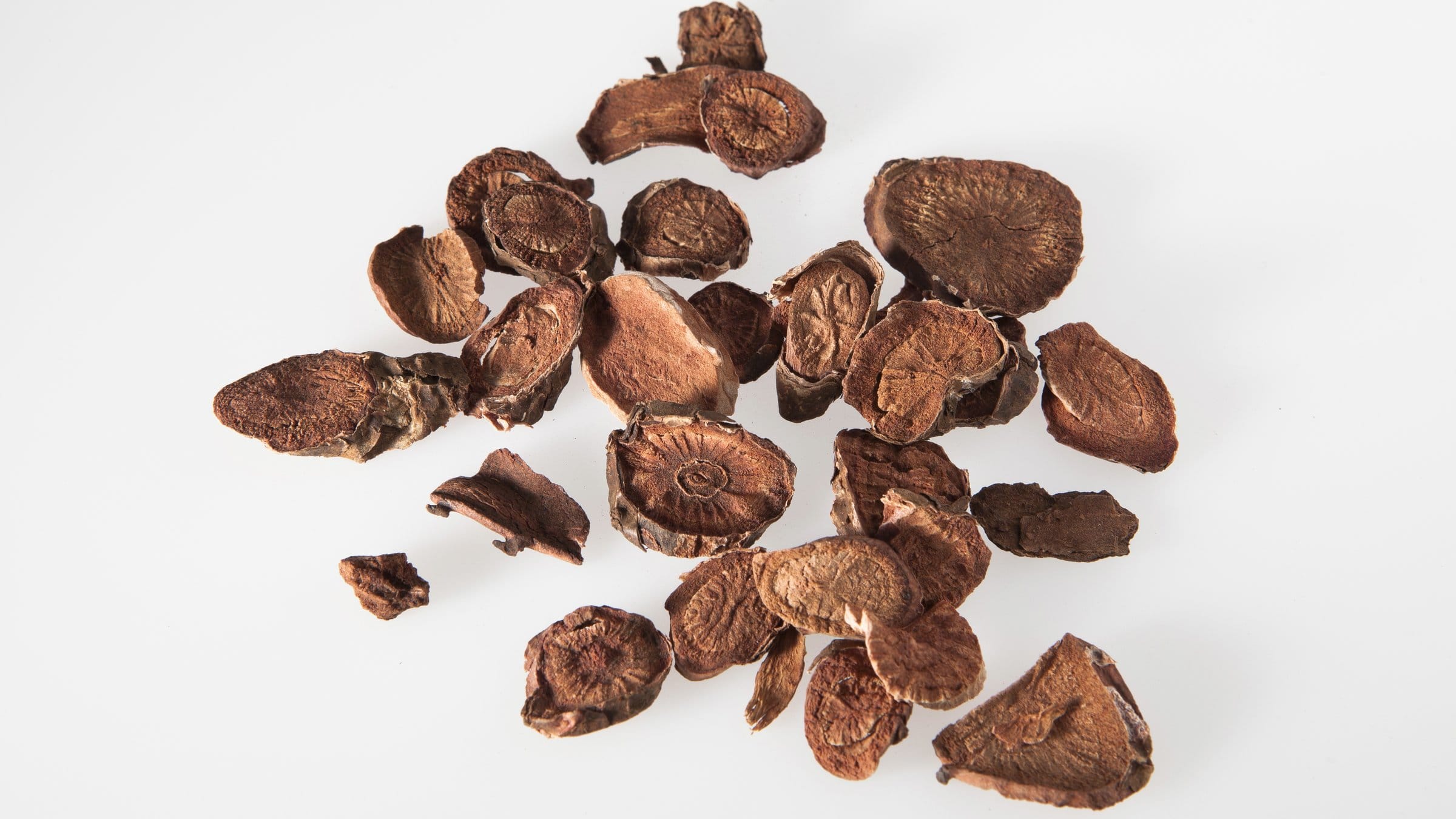
Pelargonium sidoides is a low-growing geranium from the grasslands of the Eastern Cape, the Free State and Lesotho. The dark tuberous root is the commercial part, dried and extracted.
Two species move through the trade, P. sidoides and the closely related P. reniforme. Both are recognised in the European Pharmacopoeia, but they are different plants with different chemistry. Once root is chopped and milled the difference is invisible, which makes identity a laboratory question. Ask which species your specification actually names.
The winter respiratory shelf is seasonal, crowded and watched more closely than most
Winter respiratory is one of the few genuinely seasonal shelves in consumer health. Retailer listings are agreed the previous spring, stock lands in early autumn, and a product that misses the window waits a full year.
It is also the shelf where regulators look hardest. Products sit next to registered medicines, shoppers read them as medicines, and the language a brand may use is narrower than it looks. Much of that competing language belongs to registered products and is not available to a supplement.
In much of Europe pelargonium is a medicines-channel ingredient, not a supplement one
The food supplement route for pelargonium root is closed or contested across several European markets. Belgium published a position on 30 May 2022 treating Pelargonium sidoides root as a novel food. Italy listed it for supplement use in 2014 under the Belfrit list, then moved it to novel food status pending evidence of significant consumption before 15 May 1997. An unauthorised novel food cannot lawfully be placed on the market.
The route that does work in Europe is registration as a traditional herbal medicinal product, supported by the EU herbal monograph for Pelargonium sidoides DC. and/or P. reniforme Curt., radix, adopted on 29 May 2024 at Revision 2 on the traditional-use basis. The United Kingdom runs the equivalent Traditional Herbal Registration scheme, and registered pelargonium products are on sale there. In the United States it appears both in dietary supplements and in over-the-counter homeopathic drug products, two different rulebooks. In South Africa it falls to SAHPRA under the complementary medicines framework.
Format is not a marketing choice here, because the monograph treats liquids differently
Liquid formats matter on pelargonium for a regulatory reason rather than a consumer one. The EU herbal monograph sets posology for a liquid extract preparation down to three years of age, while the solid dosage forms it covers start at six. If a brand wants to reach three- to five-year-olds, the liquid is the only format the monograph gives it.
That shapes the whole line architecture. A syrup or drops presentation for younger children, tablets or capsules for everyone else, and one supplier holding both is a shorter chain than two. Afriplex supplies the root as an undiluted powder extract, as two grades standardised on umckalin content, and as a liquid extract intended for beverage and oral liquid formats.
The formulation problems are astringency, colour and the liquid itself
Pelargonium root extract is dark, tannic and astringent, and those three facts drive most of the development work. The bulk of the material is proanthocyanidin rather than marker coumarin, so mouthfeel and colour scale with dose. A children’s syrup has to carry that load without becoming undrinkable.
Sweetener and flavour systems have to be designed around it rather than added at the end. Astringency is not masked by sweetness alone, and the usual answers change the label as well as the taste. Colour is the other constraint, and a deep brown liquid rules out the pale, clear presentation many winter ranges use.
Liquid brings its own file. Solvent carry-over, ethanol declaration, preservation, microbiological control and stability over a two-year ambient shelf life are all questions a powder does not raise. Powder extracts raise different ones, principally blend uniformity, flow and compression on a tablet line.
Sourcing pelargonium is a wild-collection question before it is a price question
Pelargonium root comes both from wild stands across the Eastern Cape, the Free State and Lesotho and from cultivated plantings. Taking the root kills the plant, so wild volumes are not elastic and a large order cannot be filled by collecting harder.
That changes how a launch is planned. Ask which of the two a quoted batch came from, which season and which site the lot traces back to, and how the species was confirmed when the material arrived. A supplier buying at origin rather than through an export intermediary has a shorter chain to answer those questions from, and lead times behave differently here from a leaf crop.
Questions brand owners ask
Can I sell a pelargonium food supplement in the EU?
Not safely, and not uniformly. Belgium and Italy have both treated the root as a novel food, and an unauthorised novel food may not be placed on the market. Check the position in every member state you intend to ship to before you commit artwork.
Which grade should I specify?
That follows the channel, not the other way round. A traditional herbal medicinal product dossier, a supplement capsule for a market where that route is open, and a paediatric oral liquid each start from a different material. Specifying the wrong grade costs money either way.
Can I use the published clinical research in my marketing?
No. The substantial clinical literature on pelargonium attaches to a specific proprietary reference extract. That evidence belongs to that extract and does not transfer to the botanical or to any other supplier’s material.
How long does a traditional herbal registration take?
Longer than a supplement launch, and it is a dossier project rather than a purchasing decision. Budget for stability data, a defined manufacturing process and indication wording fixed by the monograph.
What should I ask a supplier for on day one?
The species named on the certificate of analysis, the analytical method behind the marker figure, and whether the root was wild-collected or cultivated. Ask for the batch traceability, not the origin story.
Is the liquid extract just a convenience format?
No. It is the format the EU herbal monograph gives posology for down to three years of age, where the solid forms start at six. If younger children are the target shopper, format is a regulatory decision.
How Afriplex supplies pelargonium
We extract cultivated and wild-harvested Pelargonium sidoides root in Paarl and manufacture finished dosage forms in the same licensed organisation, under a SAHPRA section 22C(1)(b) licence. Oral liquids, tablets, capsules and lozenges are made in-house, and every batch is released against a certificate of analysis that specifies single-species identity, a tighter standard than the monograph requires. Afriplex® PelargoniumS70 is our standardised root extract. Specifications and batch traceability records are available on request.
This article describes a botanical ingredient supplied to businesses for formulation. It is not directed at consumers, it does not describe a finished product, and nothing in it is a therapeutic claim or medical advice. Regulatory classification varies by country.