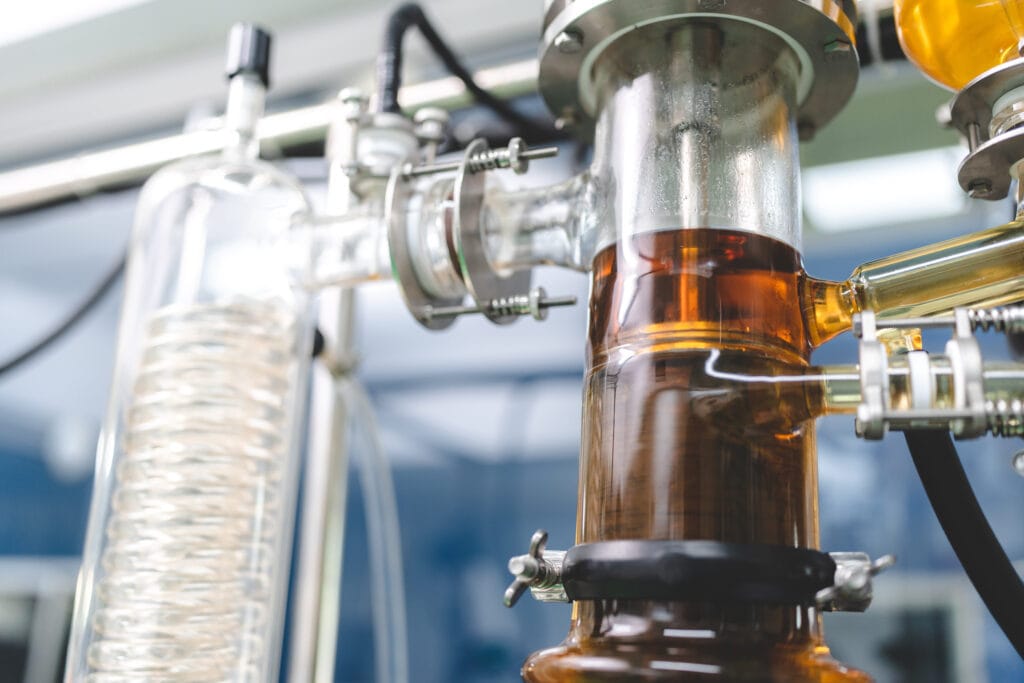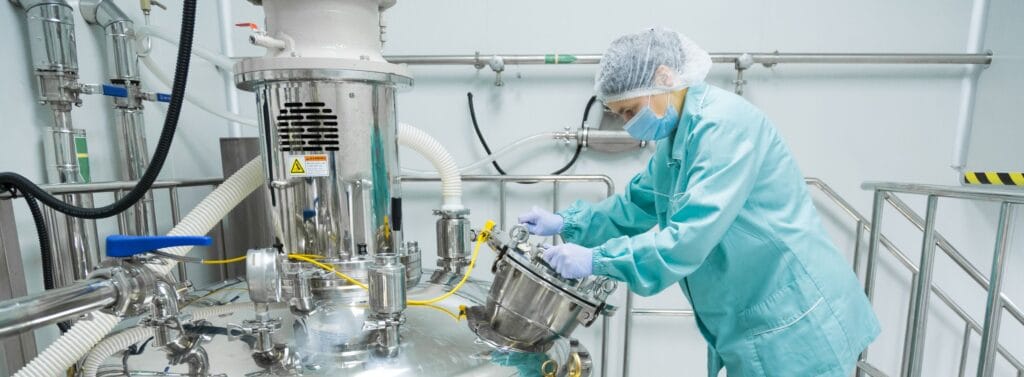

Eighteen months in development, Afriplex’s dedicated cannabis analytical laboratory in Paarl is among the first facilities in South Africa built specifically to test cannabis and cannabis-derived materials to pharmaceutical standards. As the industry formalises around licensed cultivation, it answers the question that follows every harvest and every extraction batch. Can what is claimed for this material be demonstrated?
Why cannabis is a difficult analyte
Cannabinoids exist in two interconvertible forms. The plant synthesises acids, THCA and CBDA among them, which lose carbon dioxide and convert to their neutral counterparts when heated. That single fact governs method choice. Gas chromatography heats the sample in the injector, so the acids decarboxylate during the measurement itself and the instrument reports the two forms combined. High-performance liquid chromatography runs without heat and quantifies each form separately.
The distinction has direct regulatory consequences. Where a limit is expressed as total THC, the calculation has to account for the mass lost in decarboxylation, so THCA is multiplied by 0.877 before being added to the free THC. A laboratory that cannot separate the two forms cannot perform that calculation from first principles, and every downstream statement about content inherits the uncertainty.
The matrix creates its own difficulties. Cannabis produces well over a hundred structurally similar cannabinoids, several of which co-elute under careless conditions. Terpenes are volatile enough to be lost to sample handling before analysis begins. And the plant takes up what its growing environment offers, which is why contaminant testing carries as much weight here as cannabinoid testing.
The compliance panel
Identity comes first, through morphological evaluation and comparison against identification marker libraries. Cannabinoid assays follow. THC, CBD and CBN among others are determined by HPLC where the acid and neutral forms must be kept separate, and by gas chromatographic methods including GC-MS where neutral-form or total profiles are the question, all against certified reference standards.
Contaminant testing addresses the risks a natural product carries with it. Residual solvents from extraction are determined by headspace gas chromatography, heavy metals by inductively coupled plasma mass spectrometry, and microbiological quality by total viable counts and tests for specified organisms. Pesticide screening runs by mass spectrometry, on the reasoning that a crop grown outdoors has been exposed to whatever its neighbours were sprayed with.
Stability studies track how materials and finished formats hold their specification over time. Powders, tinctures, oils and active pharmaceutical ingredients all go on programme under controlled temperature and humidity. A specification that holds at release and fails at month twelve gives a customer nothing to build a product on.
What surrounds the instruments
Samples move under a laboratory information management system with full chain of custody, so any result can be traced back to the material it came from and the analyst who produced it. Work runs under good laboratory practice protocols aligned with our GMP quality system. Methods are validated before they are relied on, against the internationally recognised criteria for specificity, linearity, accuracy, precision and the limits of detection and quantitation. The facility operates with the security and access control appropriate to scheduled material.
Instruments are the visible part of a laboratory and the smaller part of what makes a result defensible. A number produced outside a controlled system is difficult to defend to a regulator, an auditor or a customer, and all three will ask.
Who the laboratory serves
The laboratory was built to serve an industry, not a single company. It has been nominated by the South African Cannabis Research Institute as its laboratory of choice in South Africa, and works under the oversight of a responsible pharmacist. Its services support licence holders demonstrating compliance to the Department of Health and SAHPRA, universities and researchers characterising materials, medical practitioners and pharmaceutical companies developing products, and international medicinal plant specialists needing South African analytical capacity.
The laboratory covers the chain from cultivation monitoring through extraction control to final product release. Every claim of quality made about a batch traces back to a measurement made under a validated method.
analytical expectations for cannabis have consolidated internationally since this laboratory opened. Validated methods, pharmacopoeial reference standards and GMP laboratory status are now baseline requirements for medicinal supply, and the panel described here has grown alongside the industry’s widening interest in minor cannabinoids.
This article describes analytical laboratory capability offered to licensed businesses and researchers. It is not directed at consumers and nothing in it is a therapeutic claim, medical advice, or an offer of cannabis products to the public.