
After reading this you will know how dried valerian root differs from a valerian root extract as a purchase, what the valerenic acid figure on a certificate does and does not tell you, and which regulatory route controls the words on your pack.
Valerian is a cultivated European root, and the dried root and the extract are different purchases
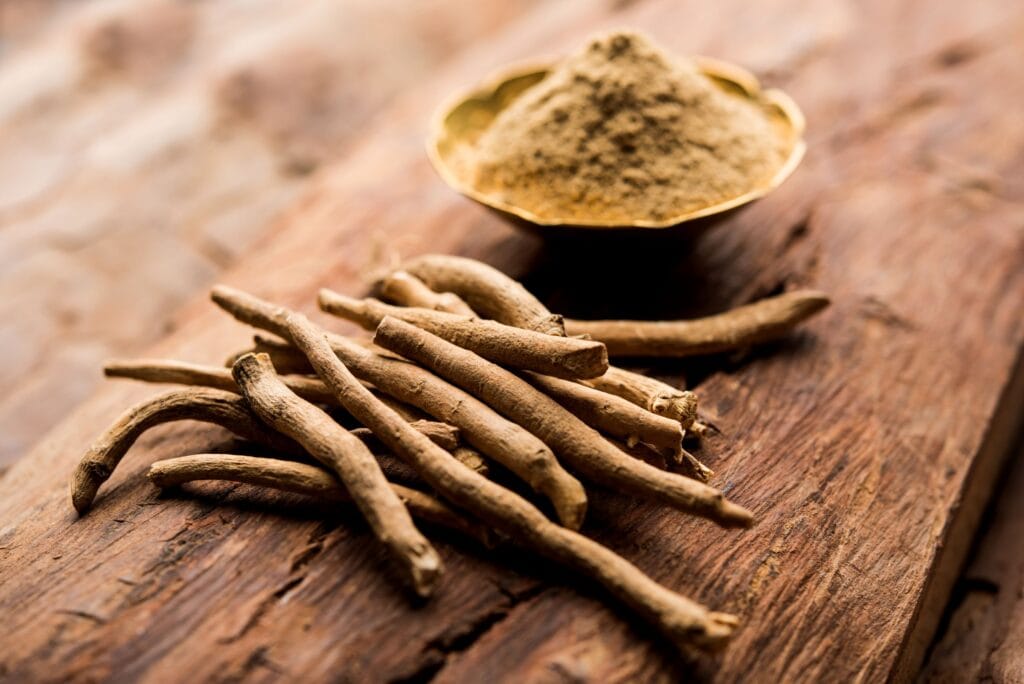
Valeriana officinalis is a perennial native to Europe and western Asia, and the part traded is the underground system of rhizome, roots and stolons. Commercial material comes from cultivated crops, and in Germany the plant has been the subject of breeding work aimed at root yield and harvestability.
Dried root is sold whole, cut for tea or milled to powder, and is specified by identity, essential oil and marker content. A valerian root extract is a concentrate made with a stated solvent at a stated drug-to-extract ratio, and that solvent carries regulatory consequences the dried root does not.
Calm and mental wellbeing ranges buy valerian for recognition, and the wording ceiling is low
Valerian is one of the most recognised botanical names in the calm and evening category. Recognition is the commercial asset. The wording a marketer would like to attach to it is, in most markets, reserved for registered medicines, so plan the range on the assumption that the name has to do the work.
That shapes format early. A tea can use cut root. A capsule can use milled root or an extract. A gummy, liquid or stick pack needs an extract, and it brings the odour problem into a format where the consumer meets it first.
Valerenic acids are the marker the specification is built on
The European Pharmacopoeia defines valerian root in monograph 0453 as the dried, whole or fragmented underground parts, and sets minimum contents of essential oil and of sesquiterpenic acids expressed as valerenic acid, 4 ml/kg and 0.17 per cent in the text cited by the EU assessment report. Cut valerian root for herbal tea has its own monograph, 2526, with lower minima.
Extracts are covered separately. Valerian dry hydroalcoholic extract (1898) allows ethanol from 30 to 90 per cent V/V or methanol from 40 to 55 per cent V/V and sets a minimum of 0.25 per cent sesquiterpenic acids. Valerian dry aqueous extract (2400) sets a much lower minimum of 0.02 per cent.
Content varies widely at source. Work on individual plants found roughly fourfold variation in valerenic acid derivatives within one cultivated population, with seed-raised plants less uniform than micropropagated ones. Buy against a range with a stated method, not a single figure.
The odour is chemistry, and it decides both the format and the pack
Dried valerian root has a strong odour that many people find unpleasant. The EU assessment report attributes it in part to isovaleric acid, which forms as the unstable valepotriates break down during drying and storage. The smell is therefore not a fixed property, and it tends to strengthen as material ages.
For formulation, that means odour transfer. In capsules and tablets it escapes through shells and fills the headspace of a bottle, so the consumer meets the smell on opening. Barrier packaging, blisters, film coating and a desiccant all reduce it. In teas it is part of the product and is usually managed by blending. In liquids and gummies it has to be masked, and the masking load rises with inclusion rate. A lot that smells markedly stronger than its reference sample has probably been stored warm or long, so check the marker.
Drying and storage remove what the specification measures
Volatile loss starts at the dryer. In a study of fresh valerian root, raising the drying temperature from 15 °C to 40 °C cost around 23 per cent of valerenic acids, and moving from 40 °C to 50 °C cost a further 36 per cent, while washing and cutting before drying made little difference. The authors recommended drying at the lowest feasible temperature.
Storage continues the process. A six-month study at 5, 14 and 30 °C found losses under every condition, greatest at 30 °C, with retention best below about 14 °C. Ask how the lot has been held, not only when it was harvested, and put the storage condition on the specification. Essential oil and valerenic acids are concentrated in the fine adventitious roots, so cleaning that strips them lowers content too.
Species identity is the sourcing question that matters most
The genus holds more than 250 species. The EU assessment report notes that valerenic acids, long treated as markers specific to V. officinalis, have also been found in other species, so a passing assay does not prove identity, and once root is cut or milled morphology gives little help.
Ask for identity by the pharmacopoeial method and a chromatographic fingerprint against a reference, and, where the risk justifies it, DNA-based authentication. Country of origin and harvest date belong on the certificate of analysis beside the assay.
The regulatory route sets the words, not the ingredient
In the European Union the medicinal position is set by the EU herbal monograph on Valeriana officinalis L., radix (EMA/HMPC/150848/2015), adopted on 2 February 2016. It recognises one preparation under well-established use, a dry extract made with 40 to 70 per cent V/V ethanol at a drug-to-extract ratio of 3 to 7.4:1, and a longer list of traditional use preparations, including powdered root, aqueous extracts and tinctures. The indications are the regulator’s wording and belong to the medicines route. The EMA opened a periodic review with a call for data in 2025. A Ph. Eur.-compliant hydroalcoholic extract is not automatically a monograph preparation, because the well-established use entry is narrower on solvent than the pharmacopoeia.
In EU food supplements, claims fall under Regulation (EC) No 1924/2006, and botanical claims on hold since 2012 can be used under Article 28(5) and (6) only if otherwise compliant. National positions on valerian in supplements differ. In the United States valerian is sold as a dietary supplement under the Dietary Supplement Health and Education Act of 1994. In South Africa a product presented for a health purpose falls under the Medicines and Related Substances Act 101 of 1965 and SAHPRA’s complementary medicines framework, and an advertised unregistered complementary medicine must state that SAHPRA has not evaluated it for quality, safety or intended use.
Questions brand owners ask
Do I need dried root or valerian root extract?
It depends on format and route. Teas and many capsules can use root specified to the Ph. Eur. root monographs. Gummies and liquids need an extract, and EU monograph wording needs an extract that matches a monograph preparation in solvent and ratio.
Can I use the EU monograph indication on a food supplement?
No. That wording belongs to registered medicines, and on a supplement it would generally be treated as a medicinal claim.
What should the purchase specification contain?
Botanical name, plant part, identity method, essential oil content, sesquiterpenic acids as valerenic acid with the method, loss on drying, microbiological limits, heavy metals, pesticide residues, storage condition, country of origin and harvest date.
How do I keep the odour from reaching the customer?
Use barrier packaging, blisters or a desiccant, store raw material cool, and test the finished pack after accelerated storage, not only at release.
Is a higher valerenic acid figure a better ingredient?
It is better preserved against that marker, which reflects drying, storage and genetics. It describes composition and establishes no effect for a finished product.
How Afriplex supplies valerian
We supply Valerian in our Botanical Plants range as dried root, whole, cut and powdered, released against a certificate of analysis, with specifications available on request. Our SAHPRA-licensed laboratory carries out method development, validation, release and stability testing, and we manufacture under a SAHPRA section 22C(1)(b) licence in Paarl. Where a project needs a finished product, we make teas, capsules, tablets, powders and sachets in-house. Product classification and claim substantiation remain with the party placing the product on the market, and our regulatory affairs team supports customers through that process.
This article describes a botanical ingredient supplied to businesses for formulation. It is not directed at consumers, it does not describe a finished product, and nothing in it is a therapeutic claim or medical advice. Regulatory classification varies by country.