
After reading this you will know why the aroma of white ginger root is the commercial argument for it, which formats hold that aroma, and which of its better-known traditional uses can never appear on a pack.
Mondia whitei is an African climbing plant whose root smells of vanilla and spice
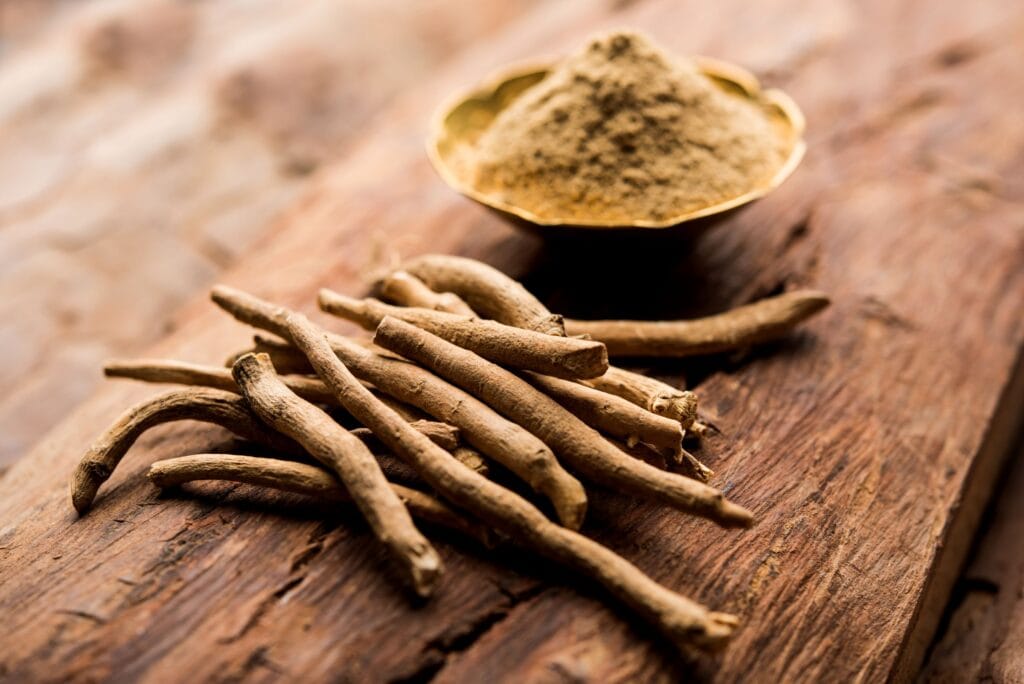
Mondia whitei is a climbing plant of tropical and southern Africa, known as white ginger or mulondo. The root is the part in trade and carries a distinctive vanilla-and-spice aroma, driven principally by a compound called 2-hydroxy-4-methoxybenzaldehyde.
The compound is close in structure to vanillin without being vanillin, which is why the root reads as vanilla adjacent rather than as vanilla. It also occurs in Indian sarsaparilla root, so the sensory character is familiar to a flavourist even if the plant is not.
The ingredient is unfamiliar and worth saying so. The commercial interest is real and the published science behind it is slight.
The reason to look at it is flavour, and that is the honest argument
Mondia whitei belongs on a flavour brief before it belongs on a supplement brief. Its distinguishing feature is an aroma most consumers outside Africa have never met but recognise at once as pleasant, a rare position.
That puts it among origin-led flavour botanicals rather than in a functional category. Brands that use it well lead with taste, place and story. Brands that try to build a functional position run into the claim problem set out below.
The formats that suit it are the ones that reward aroma
Infusions and herbal teas fit best, because brewing releases the aroma at the moment of drinking. Flavour-forward beverages, syrups, cordials and craft mixers come next, with the root as a named signature note.
Confectionery and bakery are realistic for the same reason vanilla is, provided the process does not cook the aroma away. Gummies sit in the middle, carrying flavour well but demanding that the aroma survive a hot depositing step and a long shelf life.
Capsules and tablets are the weakest fit. They discard the one property that makes the plant interesting and leave a brand selling a name.
The formulation problems are volatile loss, dominance and batch drift
The aroma is both the asset and the constraint. It rests on a volatile aldehyde, so heat, long drying, oxidative exposure and unprotected spray drying all cost aroma, and the process choices that keep the top note are the ones that lower yield.
Dominance is the second problem. At a meaningful inclusion rate the root leads a blend, which suits a single-botanical infusion and works against a formula where something else is meant to lead. Decide early whether this is the headline or an accent, because the two need different inclusion rates.
Batch drift is the third. There is no established public marker specification for this material, so aroma consistency has to be held by sensory panel alongside chromatography, not by an assay figure alone. Aroma also moves between release and end of shelf life, so the stability protocol has to track sensory profile, not only assay and microbiology.
The traditional uses most often repeated for this plant cannot go on a label
The uses recorded for Mondia whitei in the ethnobotanical literature concern libido and appetite, and no supplier or brand may make a claim about either. That is not a hedge or a matter of careful wording. It is the position in every market that matters.
In the EU a nutrition or health claim may only be made if it appears on the Union list authorised under Regulation (EC) No 1924/2006, and nothing is authorised for this species. In South Africa such a claim moves the product into SAHPRA’s medicines framework. In the United States it would still need substantiation on file, and none exists for this plant.
A second gate sits before all of that. For EU food use the novel food question comes first, because a botanical without a documented history of significant consumption in the EU before 15 May 1997 needs authorisation.
Root harvesting removes the plant, so cultivation is the sourcing conversation
Mondia whitei is under harvest pressure across parts of its range, and the reason is mechanical rather than sentimental. On a leaf or bark crop a harvester takes part of a plant and returns. On a root crop the harvest ends that plant, so demand turns directly into population loss unless the material is farmed.
Cultivation is the responsible route and it is being developed in several African countries. For a brand owner this is due diligence with commercial teeth, because a wild-collected chain with no record of origin will fail the first serious sustainability audit.
Put the questions plainly. Which country did this lot come from. Is it cultivated or wild-collected, and what evidences that. Can the supplier name the grower or the collection area.
Questions brand owners ask
Is it just an African vanilla?
No, and describing it that way will disappoint a panel. The aroma is vanilla adjacent with a spiced, root-like character behind it, and it will not substitute for vanilla in a recipe built around it.
Should I buy it as a flavouring or as a botanical extract?
Decide before you order, because the documentation differs. Material sold into a flavour application is evidenced differently from the same material sold as a botanical extract, and the two files are not interchangeable. In the EU flavourings fall under Regulation (EC) No 1334/2008, a separate route from food supplements.
Can I say anything at all on pack?
You can describe what it is, where it comes from, what it tastes of and how it was made. Origin, identity, plant part, process and sensory description are all available. Effect is not.
What should I expect on batch consistency?
A wider band than on a cultivated crop with a published marker. Ask for retained reference samples, a chromatographic fingerprint and a sensory specification agreed with your own panel before the first order.
Is there research I can point to?
Not for a claim. The published record is small and mostly phytochemical and ethnobotanical, with some in vitro work, and there is no clinical literature. A research-led positioning is not available for this plant.
How Afriplex supplies Mondia whitei
We supply Mondia Whitei PE as a NOVEL-T™ powder extract, released against a certificate of analysis. Extraction and finished dosage form manufacture sit in one licensed organisation in Paarl, Western Cape, covering teas, powders, sachets, gummies, oral liquids and lozenges. Specifications are available on request.
This article describes a botanical ingredient supplied to businesses for formulation. It is not directed at consumers, it does not describe a finished product, and nothing in it is a therapeutic claim or medical advice. Regulatory classification varies by country.