
After this you will know what a devil’s claw specification has to contain, why the Kalahari harvest chain decides whether a European retailer will list you, and what a supplier can actually evidence about where the tubers came from.
Devil’s claw is a Kalahari tuber and only part of the plant is taken
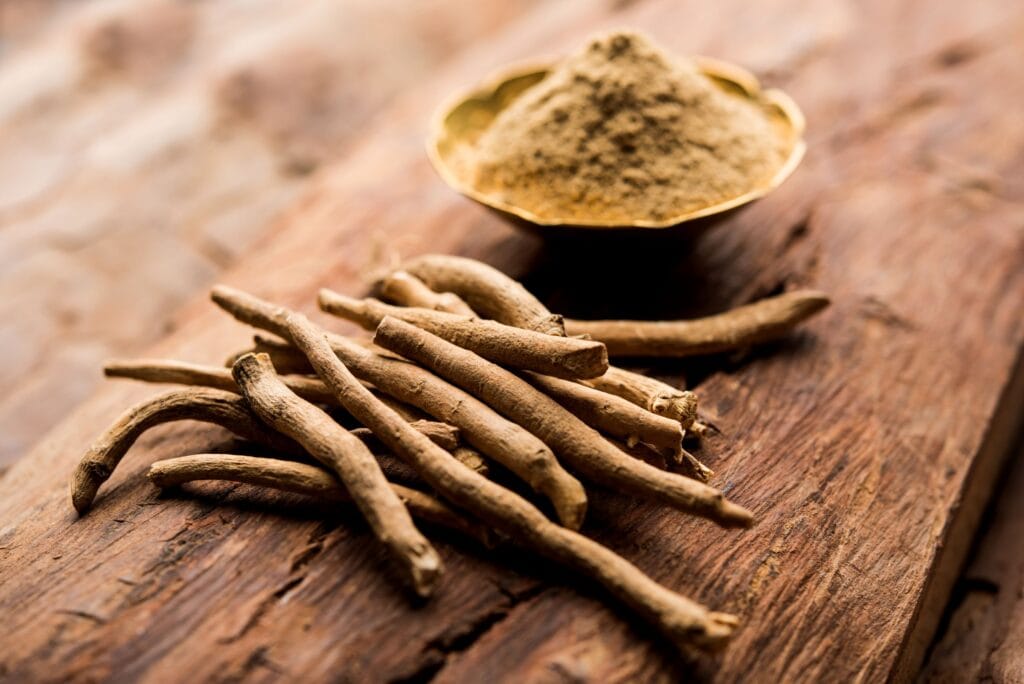
Harpagophytum procumbens is a trailing plant of the Kalahari sands of Namibia, Botswana and South Africa’s Northern Cape, and the secondary storage tubers are the part used. Harpagophytum zeyheri is a closely related species recognised alongside it in trade and in European regulatory instruments.
Harvesters lift the lateral roots, cut the secondary tubers away, leave the primary tuber in the ground and refill the hole. That distinction is the whole basis on which the harvest can be called repeatable, because taking the primary tuber ends the plant.
It sits on a crowded shelf where evidence and provenance both get asked about
Devil’s claw sells into the joint comfort and mobility category, one of the most competitive shelves in supplements and one of the most heavily policed for claims. Buyers arrive with two questions, what the specification says and where the material came from.
Devil’s claw is unusual among southern African botanicals in having an established European medicinal position. That shortens the specification conversation and lengthens the sourcing one.
Harpagoside is the number the whole trade buys on
Harpagoside is an iridoid glycoside and it is the figure a buyer asks for before anything else. A quotation without a harpagoside percentage and a stated test method is not a specification, and two offers quoting different methods are not comparable.
Content varies with provenance, tuber age and drying, so a batch figure is a batch figure and not a property of the species. Ask for the range across recent batches, not one flattering certificate. H. zeyheri material typically carries proportionally less harpagoside, which is why species identity belongs beside the assay.
Devil’s claw root is also the subject of a European Pharmacopoeia monograph setting an identity method and a minimum harpagoside content. If a supplier will not commit to that method in writing, treat the refusal as the answer.
Bitterness and dose decide the format before marketing does
Devil’s claw extract is intensely bitter, and the daily intakes used in the category are high relative to a single tablet. Between them those two facts settle most format decisions before a brand team gets a say.
Bitterness makes gummies, chewables, stick packs and liquids expensive to mask, and the cost rises with inclusion rate. Dose pushes the product towards a tablet, a two-a-day regimen or a sachet, and tablet weight follows from the extract ratio. In topicals the question is how much bitter, coloured extract a base will carry without separating. Harpagoside is a glycoside and is not indefinitely stable under strongly acidic conditions, so the stability programme should follow the marker rather than the extract mass.
The sourcing chain is the part a European buyer will actually audit
Harvest is concentrated in the Kalahari of Namibia and Botswana and is done largely by rural harvesters, which makes this one of the most closely examined sourcing chains in the botanical trade. Sustainability of the harvest and the terms on which harvesters are paid are standing questions from European buyers.
Only the secondary storage tubers are taken and the primary tuber is left in the ground, so the plant survives where the work is done properly. That is what the sustainability answer rests on, and it is what fails quietly when a harvest is rushed, because no certificate of analysis records it.
What a supplier can evidence has three parts: a named and traceable chain, harvest season and site records held against the lot, and species authentication between H. procumbens and H. zeyheri on incoming material. Ask for those three. An origin story is not one of them.
Label wording differs by market and by the route you register on
What you may say is set by the regulatory route, not by the ingredient. In the European Union a food supplement carries claims under Regulation (EC) No 1924/2006, and botanical claims sit on the on-hold list pending assessment, so the wording a marketer would want is generally closed off there.
The medicinal route is separate. There is an EU herbal monograph on Harpagophytum procumbens DC. and/or H. zeyheri Decne., radix, adopted on 12 July 2016, covering a well-established use pathway and a traditional use pathway. The wording is fixed by the regulator, and eligibility depends on the preparation matching the monograph, in particular the solvent and the drug-to-extract ratio. The United Kingdom runs an equivalent scheme through the MHRA.
In the United States devil’s claw is a dietary ingredient under the Dietary Supplement Health and Education Act of 1994, where structure and function claims carry the statutory disclaimer and a notification to the FDA. In South Africa complementary medicines fall under the Medicines and Related Substances Act 101 of 1965 and sit with SAHPRA in Category D, where an advertised unregistered complementary medicine must carry the wording “This unregistered medicine has not been evaluated by the SAHPRA for its quality, safety or intended use.”
Questions brand owners ask
How do I know which species I am buying?
H. procumbens and H. zeyheri move through the trade together and the European monograph admits both, but they are not interchangeable on assay. Once material is sliced and milled, morphology is no help. Ask which species the certificate names and by what method the finding was made.
What should I put in the purchase specification?
Species, plant part, harpagoside percentage with the test method, drug-to-extract ratio, solvent, identity method, and microbiological and heavy metal limits. Add origin country and the harvest season and site records behind the lot, because a European customer will ask anyway.
Will a retailer really ask about harvester payment?
Yes, and early in the listing process. Sustainability of the harvest and harvester remuneration are standard questions in European buyer questionnaires for this species. Have a documented answer before the meeting, not a line about heritage.
Can I use the EU monograph wording on a food supplement?
No. Monograph wording belongs to the medicinal route, and using it on a supplement label mislabels the product. If that wording is central to your positioning, registration is the decision you are really making.
Aqueous or hydroalcoholic extract?
They are not interchangeable for regulatory purposes whatever their harpagoside content, because the monograph defines the preparations it covers. Decide the solvent against your intended route first, then run the taste and dose work.
How Afriplex supplies devil’s claw
We supply devil’s claw as a NOVEL-T™ botanical extract, released against a certificate of analysis. Extraction and finished dosage form manufacture, including tablets, capsules, sachets, oral liquids and topicals, sit inside one licensed organisation in Paarl, and because we buy at origin in South Africa rather than through an export intermediary, the chain behind the material stays short. Specifications are available on request.
This article describes a botanical ingredient supplied to businesses for formulation. It is not directed at consumers, it does not describe a finished product, and nothing in it is a therapeutic claim or medical advice. Regulatory classification varies by country.